
Coleman County Arrest Warrants Explained
Texas criminal procedure generally begins with a sworn complaint or affidavit and a probable-cause review by a judge or magistrate. Pass that review, and the court can issue an arrest warrant authorizing an officer to take a person into custody. A bench warrant is not that. It issues after someone misses court. In Coleman County, the countywide Justice Court names the JP as lead magistrate for Chapter 15.17 hearings and says the court issues arrest, search, and blood warrants in misdemeanor and felony matters. Other Coleman County courts may act too. The order and case file fix the issuing court.
Coleman County Arrest Warrant Review
The Coleman County Justice Court page is unusually specific about local magistrate work. It names the JP as lead magistrate for rights and bail hearings at any level and lists several warrant categories, though that role does not reach every felony or city file. The clerk follows the court that owns the case. Felony records sit with the District Clerk. That office holds the 42nd District Court file. County misdemeanors route to County Court and its clerk. A search warrant is separate under Chapter 18. For arrest authority and magistration, Texas Code of Criminal Procedure Chapter 15 sets out the rules. Coleman County publishes no public warrant application form or sample order.
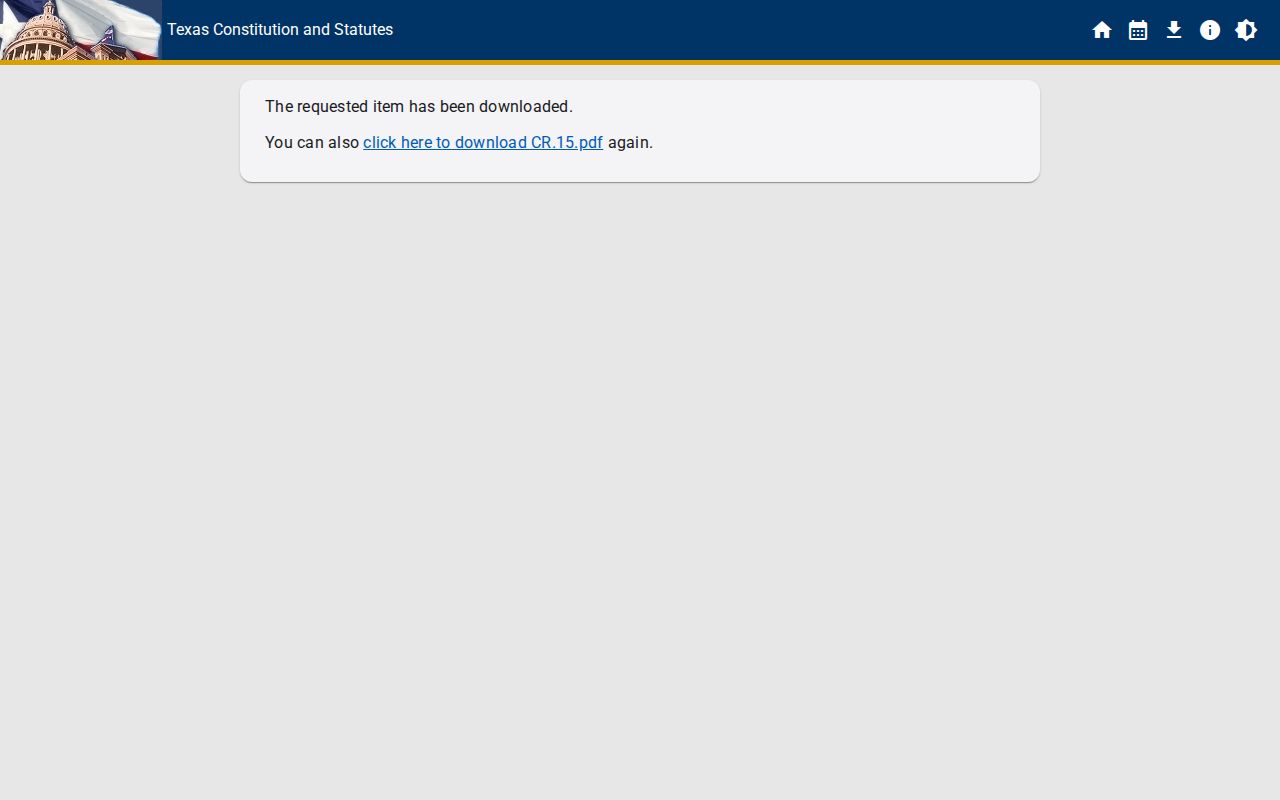
The image shows the statutory process source, not a person's complaint or warrant.
Inside a Coleman County Arrest Warrant
Coleman County posts no sample warrant order. No local warrant-number format is published either. A record request can still ask for the identifying fields, subject to sealed, juvenile, investigative, and other limits that the court or law-enforcement office can explain.
| Warrant number | Local format is not published; use the case or cause number if known. |
|---|---|
| Named subject | Request only information the custodian may lawfully release. |
| Offense or reason | May identify the alleged offense or process reason in the case file. |
| Issuing authority | The judge or magistrate and court responsible for the order. |
| Bond or hold | No Coleman County schedule or general amount list was found. |
| Date and status | Ask for issue date, service action, and whether the court records it as active or recalled. |
Coleman County Warrant Schema
A case number tells you little. Do not infer meaning from it. Coleman County has published no warrant-number segments, no status-code key, and no public example record. A request can still ask for the cause number, process type, date issued, court, and any recorded service or recall action. Subject details may be limited or redacted. Juvenile arrest warrants and their supporting complaints get specific confidentiality protection under Texas Family Code Section 58.010. Sealed or active-investigation material may also be withheld. The issuing court can point to the public-record route without giving legal advice about the case.
Serving Arrest Warrants in Coleman County
The Coleman County Sheriff is the main law-enforcement contact. The countywide Constable serves process separately. Coleman Police Department handles city police matters through county dispatch, and Santa Anna keeps a police contact through the city. None of the public pages assigns every Coleman County criminal warrant to one service office. That split is not published. Texas law governs arrest, disclosure of authority, and prompt magistration. Locally, the Coleman JP serves as lead magistrate for rights and bail hearings. The Sheriff page says nothing about booking steps, surrender intake, bond payment hours, or a jail bond window. Call the Sheriff or court before making plans.
Coleman County Warrant Service Roles
The county directory names Sheriff Les Cogdill and Countywide Constable Johnny Barkemeyer. The Sheriff page lists the Law Enforcement Center. The Constable page gives its courthouse office. Neither publishes a warrant-unit roster or a detailed service assignment list. Coleman PD sits at 109 North Concho Street. Dispatch routes through the Law Enforcement Center, and Santa Anna's police contact is at City Hall. The 42nd District Court page gives the trial-court route for Coleman County, though the issuing court still controls its own case record.
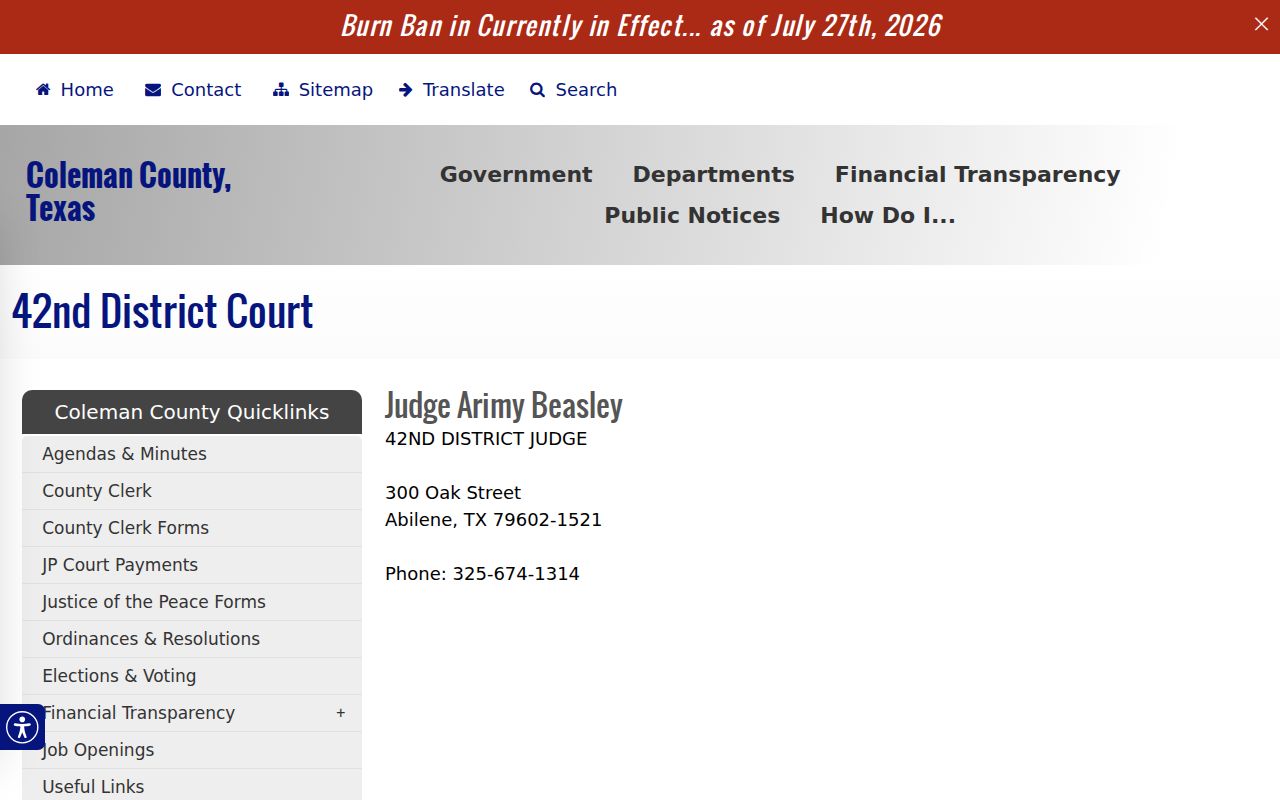
Coleman County keeps these routes separate. Use the District Clerk for felony file records.
Comparing Arrest, Summons, and Bench Warrants
An arrest warrant authorizes custody after the required legal review. A summons just tells a person to appear. A bench or FTA warrant ties to a missed court obligation instead. Ask the issuing court which paper or docket entry is involved, and for a missed setting see the Coleman County bench-warrant process.
| Feature | Arrest Warrant | Summons | Bench Warrant |
|---|---|---|---|
| What it orders | Officer to take a person into custody | Person to appear as directed | Arrest or production after a court obligation |
| Basis | Probable-cause process | Notice to attend court | Failure to appear or comply |
| Who issues it | Authorized judge or magistrate | Court or other authority under law | Judge in the court with the case |
| How to respond | Ask court and counsel about bond and appearance | Follow the date and directions on the summons | Ask issuer about recall or a new setting |
After Arrest in Coleman County
Texas procedure calls for prompt magistration after arrest. The law covers when an arrest occurs and when officers must make their authority known. It also gives the arrested person the right to have the warrant shown on request. Coleman County's JP page identifies the local magistrate role. Exact booking times are not stated publicly. Neither is a universal release timeline. Posting bond does not end the case. Ask whether a future appearance is set. Ask also whether a separate warrant entry must be recalled or marked served. The Texas Judicial Branch directory helps with court routing, and no general bond amount, accepted jail payment method, or local bond window is published for Coleman County.
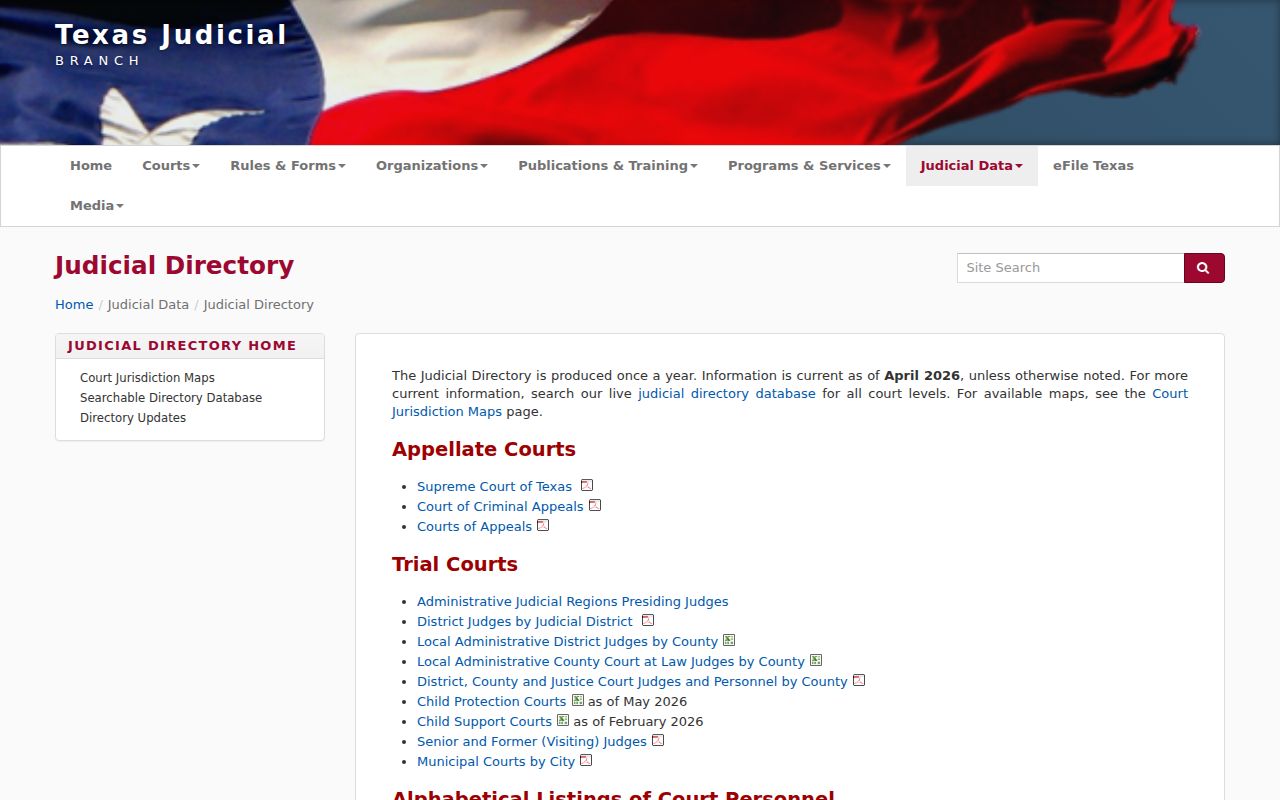
The case file itself is another matter. Coleman County's District Clerk or County Clerk can direct a records request to the right court.
If There's an Arrest Warrant for You
If an arrest warrant might carry your name in Coleman County, skip the shortcut searches and go to the source. The issuing court answers that question, and the Sheriff can tell you how to confirm a record directly. Once you know, talk to a lawyer before you act. Counsel can weigh whether a voluntary appearance fits your case and what paperwork the court wants. Coleman County publishes no walk-in surrender procedure, no bond schedule, and no recall form. Bring a case number if you have one, and ask how the court reports any change to the Sheriff or another agency. If the warrant is confirmed, write down the next setting and get a receipt or written order. The Coleman County resolution steps lay out the court routes that apply countywide.
Important: Confirm procedure with the issuing court and counsel before appearing; Coleman County does not publish a universal surrender or bond window.
Coleman County Arrest Warrant Steps
Felony records in Coleman County sit with the District Clerk, whose office in Coleman keeps the files for the 42nd District Court. The judge's contact page lists a judicial-office address in Abilene, but the clerk's number is still the call to make for the case route. Misdemeanors filed by the county run through the County Clerk or County Court. Class C cases and city matters can land in Justice Court or Municipal Court instead. There is no dedicated warrant phone line here, so the Sheriff's main number is the law-enforcement fallback. An arrest sends the case back to the court after magistration. For a voluntary appearance, ask the Sheriff and the court in Coleman County how local intake works before you drive anywhere.